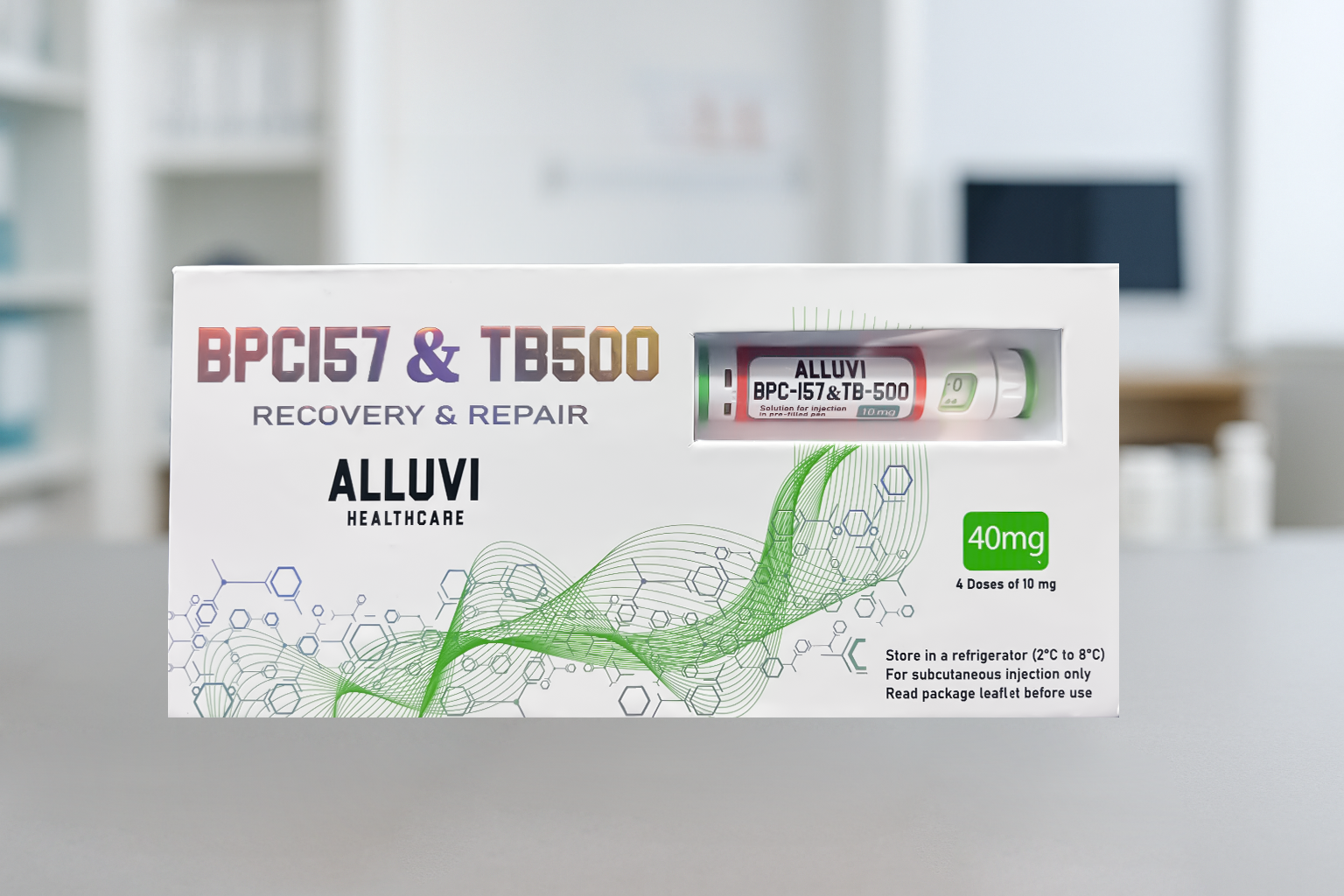
BPC-157 & TB-500
Product Information
| Product | BPC-157 & TB-500 |
|---|---|
| Active Compounds | BPC-157 and TB-500 |
| Product Type | Investigational peptide combination |
| Research Areas | Peptide biology, cellular signalling and tissue research |
| BPC-157 | Synthetic peptide studied in preclinical research |
| TB-500 | Thymosin beta-4 fragment studied in laboratory research |
| Human Therapeutic Status | Not an approved treatment |
| Clinical Evidence | Limited human evidence |
| Intended Purpose | Scientific and laboratory research |
| Product Category | Research peptide formulation |
What Is BPC-157 & TB-500?
BPC-157 & TB-500 is a research-focused peptide combination containing BPC-157 and TB-500. Both compounds have attracted interest in laboratory and preclinical research because of their biological activity and proposed involvement in cellular and tissue-related pathways.
BPC-157 is a synthetic peptide that has been investigated primarily through preclinical research. TB-500 is commonly described as a fragment related to thymosin beta-4. Research has examined both compounds in different biological models, but the available human evidence remains limited.
A recent review of emerging peptide therapies found that much of the published research on BPC-157 and TB-500 is based on animal or preclinical models, while robust human clinical evidence remains limited.
BPC-157 Research
BPC-157 is a peptide that has received considerable attention in experimental research.
Researchers have investigated its biological activity in areas including cellular signalling, gastrointestinal research and tissue-related models. However, promising findings from laboratory or animal studies should not be interpreted as proof of effectiveness in humans.
A 2026 review noted that BPC-157 remains at an early stage of pharmaceutical development, with no approved formulation and no completed Phase II clinical trial establishing a validated therapeutic use.
For this reason, BPC-157 is best described as an investigational research compound rather than an established medicine.
TB-500 Research
TB-500 is commonly associated with a fragment of thymosin beta-4 known as LKKTETQ.
Research has examined thymosin beta-4 and related fragments in areas involving cellular movement, signalling and tissue-related biological processes. Much of the evidence remains preclinical, and human clinical data for TB-500 are limited.
FDA specifically identifies TB-500 as thymosin beta-4 fragment (LKKTETQ) and notes that it has not identified human exposure data for drug products containing TB-500. The agency also highlights potential concerns involving immunogenicity, aggregation and peptide-related impurities.
Why Study BPC-157 & TB-500 Together?
The combination of BPC-157 and TB-500 is of interest within peptide research because the two compounds have been investigated in different biological models.
Researchers may study the combination to examine:
- Peptide interactions
- Cellular signalling
- Biological pathway activity
- Tissue-related research models
- Peptide stability
- Formulation characteristics
- Experimental biological responses
However, combining two investigational peptides does not establish that the combination is safe or effective as a human treatment.
There is currently insufficient high-quality clinical evidence to support marketing BPC-157 and TB-500 as an established therapy for injury recovery, pain, inflammation or tissue repair. Recent reviews similarly conclude that claims surrounding these peptides remain ahead of the available human evidence.
Research-Focused Product Information
A responsible product page for BPC-157 & TB-500 should clearly identify the product as investigational.
The exact formulation, purity specifications, analytical documentation, storage requirements and intended research purpose should be based on the actual product documentation supplied by the manufacturer.
The presence of a peptide name on a product label does not by itself establish pharmaceutical quality, safety or therapeutic effectiveness.
Safety and Regulatory Information
BPC-157 and TB-500 should not be presented as FDA-approved medicines.
FDA has identified potential safety concerns associated with compounded products containing BPC-157, including possible immunogenicity and difficulties related to peptide impurities and active pharmaceutical ingredient characterisation. For TB-500, FDA has similarly identified potential immunogenicity concerns involving aggregation and peptide-related impurities.
FDA has also discussed adverse-event reports involving compounded BPC-157 and a BPC-157/TB-500 combination. These reports do not establish causation, but they demonstrate why the safety profile of these compounds requires careful consideration.
This product should therefore be described for scientific research rather than as a proven human treatment.
Buy BPC-157 & TB-500 Research
Interest in BPC-157 & TB-500 continues to grow as researchers investigate emerging peptide compounds.
The scientific literature includes preclinical studies exploring biological activity, while newer reviews continue to highlight the gap between experimental findings and reliable human clinical evidence.
This distinction is important for anyone researching peptide products online. Laboratory findings can help identify areas for future investigation, but they do not automatically establish clinical benefits.
Online Search Terms
People researching this product may search for terms such as:
- BPC-157 & TB-500
- BPC-157 TB-500 research
- BPC-157 research peptide
- TB-500 research peptide
- BPC-157 and TB-500 research
- BPC-157 peptide research
- TB-500 peptide research
- BPC-157 TB-500 UK
- BPC-157 research UK
- TB-500 research UK
These terms can help improve search visibility while keeping the page focused on legitimate research information.
Product Quality
Quality control is particularly important for investigational peptide materials.
Product documentation should provide clear information about identity, composition and analytical testing where available. Storage and handling information should follow the manufacturer’s documentation.
Research materials should also be kept clearly separate from approved pharmaceutical products. FDA notes that compounded drugs are not FDA-approved and that inadequate quality control can result in contamination, incorrect strength or other serious problems.
Important Information
BPC-157 and TB-500 are investigational compounds and should not be described as approved medicines.
The available evidence does not establish these peptides as proven treatments for injuries, pain, inflammation, muscle recovery or other medical conditions. Current research remains limited, particularly in well-controlled human clinical studies.
This product information is intended to describe the compounds and their research background. It is not medical advice or a recommendation for human use.
Poweful Product Summary
BPC-157 & TB-500 is a research-focused peptide combination containing two investigational compounds that have attracted interest in preclinical peptide research.
BPC-157 has been investigated across several biological models, while TB-500 is associated with research into thymosin beta-4-related pathways. Both remain subjects of ongoing scientific investigation, and substantial gaps remain in human safety and efficacy evidence.
For SEO, the strongest approach is to focus naturally on BPC-157 & TB-500, BPC-157 research, TB-500 research, BPC-157 TB-500 research, and related research-focused terms rather than making unsupported therapeutic claims.
BPC-157 & TB-500 | Peptide Research Compound
Meta Description: Explore BPC-157 & TB-500, an investigational peptide combination focused on BPC-157 and TB-500 research, peptide biology and cellular pathways.
BPC-157 TB-500, BPC-157 research, TB-500 research, BPC-157 peptide, TB-500 peptide, peptide research, BPC-157 research peptide, TB-500 research peptide

Reviews
There are no reviews yet.