
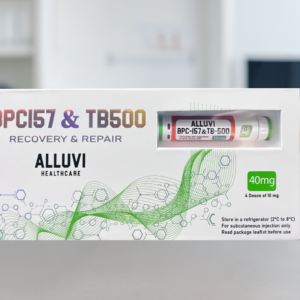
Alluvi BPC-157 & TB-500
Alluvi BPC-157 & TB-500 is a peptide research formulation combining two compounds that have attracted interest in preclinical and laboratory research. BPC-157 and TB-500 have been investigated in different areas of biological research, including cellular processes, tissue biology, and repair-related pathways.
The combination is intended to provide researchers with a convenient formulation for scientific investigation. It should not be presented as an approved medicine or as a treatment for injuries, inflammation, tissue damage, or other health conditions.
Product Information
| Feature | Details |
|---|---|
| Product Name | Alluvi BPC-157 & TB-500 |
| Active Compounds | BPC-157 and TB-500 |
| Product Type | Peptide research formulation |
| Research Areas | Cellular, tissue, and peptide biology |
| Intended Purpose | Scientific and laboratory research |
| Human Therapeutic Status | Not an approved treatment |
| Regulatory Status | Not FDA-approved as a human medicine |
| Research Focus | Peptide pathways and biological processes |
About BPC-157
BPC-157 is a synthetic peptide that has been investigated primarily in preclinical research. Scientific interest has included studies involving cellular signaling and tissue-related processes.
The available evidence does not establish BPC-157 as an approved treatment for people. FDA materials note that safety information for BPC-157 is limited and that there are concerns involving immunogenicity and peptide-related impurities for certain proposed routes of administration.
About TB-500
TB-500 is associated with research into thymosin beta-4-related pathways. Research interest has included cellular movement and tissue-related biological processes.
TB-500 is also not an FDA-approved human medicine. FDA materials identify limited human safety information and potential concerns involving immunogenicity, aggregation, and peptide-related impurities.
Key Research Areas
| Research Area | Scientific Interest |
|---|---|
| Peptide biology | Studying peptide structure and biological activity |
| Cellular research | Investigating cellular signaling and responses |
| Tissue research | Exploring biological processes associated with tissue models |
| Molecular research | Examining peptide-related pathways |
| Formulation research | Evaluating combined peptide formulations |
| Preclinical research | Supporting controlled laboratory investigation |
These research areas describe scientific investigation and should not be interpreted as established medical benefits.
Why Study BPC-157 and TB-500 Together?
Studying multiple compounds within one formulation can allow researchers to investigate different pathways within a common experimental framework.
BPC-157 and TB-500 have different research histories and biological characteristics. Examining them together may be relevant to laboratories studying peptide interactions, cellular processes, and tissue biology.
However, research involving each compound separately does not establish that the combination produces a particular clinical effect. More research would be needed to determine how these compounds interact and whether any combined effects are reproducible.
Research Quality and Documentation
When acquiring peptide research materials, laboratories should review available documentation before procurement. Important information may include product identity, stated composition, batch information, analytical testing, storage conditions, and handling requirements.
A clear certificate of analysis can also help researchers verify the reported identity and quality characteristics of a research material.
Because BPC-157 and TB-500 are not approved human medicines, researchers should also consider applicable regulations and institutional requirements before acquiring or working with these materials. FDA has specifically raised concerns about the quality and safety information available for these substances.
Ordering Research Materials
If you are searching for Alluvi BPC-157 & TB-500 online, review the product documentation and intended research application before placing an order.
Research organizations should confirm that procurement and laboratory use comply with applicable laws, regulations, and institutional policies. Products marketed as research materials should not be represented as approved treatments simply because they are labeled for research.
FDA has noted that labeling a product “research use only” does not by itself resolve regulatory concerns when a product is actually marketed for human use.
Important Notice
Alluvi BPC-157 & TB-500 is presented as research material and should not be described as a medication, dietary supplement, or approved therapy.
BPC-157 and TB-500 have not been established through adequate clinical evidence as treatments for injuries, wounds, inflammation, muscle recovery, hair loss, or other medical conditions. FDA’s current materials emphasize the limited safety information available for these substances.
This product information is intended to provide general scientific context and should not be used as instructions for human administration.
Product Summary
Alluvi BPC-157 & TB-500 combines two research peptides in a single formulation. BPC-157 has primarily been investigated in preclinical research, while TB-500 is associated with research involving thymosin beta-4-related pathways.
The combination may be of interest to laboratories investigating peptide biology, cellular signaling, tissue-related processes, and formulation research. Because available human safety information is limited, the product should remain clearly positioned as research material rather than a human therapeutic product.
Alluvi BPC-157 & TB-500, BPC-157 TB-500, BPC-157 research, TB-500 research, BPC-157 peptide, TB-500 peptide, peptide research, peptide research material, BPC-157 research compound, TB-500 research compound, peptide formulation, laboratory peptide research, BPC-157 TB-500 research, Alluvi peptide research, order Alluvi BPC-157 TB-500

Reviews
There are no reviews yet.